
- Main
- News and events
- Feline Infectious Peritonitis (FIP): Modern Treatment Methods and Chances of Recovery
Feline Infectious Peritonitis (FIP): Modern Treatment Methods and Chances of Recovery
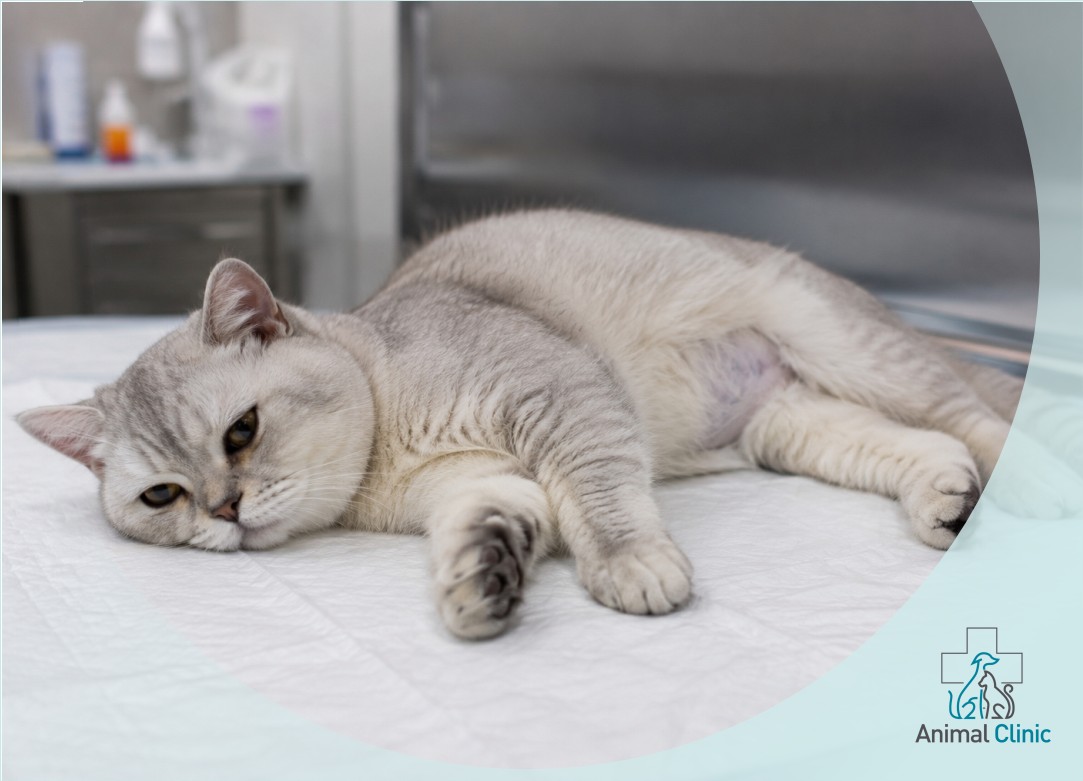
Feline infectious peritonitis (FIP) is a systemic viral disease caused by a mutation of feline enteric coronavirus (FCoV). FIP was previously considered a death sentence: mortality approached 100%, and treatment was limited to supportive care. In recent years, however, veterinary medicine has made a major breakthrough. Antiviral medications are now available and can achieve sustained remission in a substantial proportion of affected cats. In Kyiv, FIP cases are recorded year-round, most often in cats under 2 years of age from multi-cat households, shelters, and catteries.
What Is Feline Coronavirus and How Does It Become Fatal?
Feline enteric coronavirus (FCoV) is a highly contagious virus transmitted by the fecal–oral route. In most cats, it causes mild diarrhea or no symptoms at all. However, in 5–10% of infected animals, the virus mutates within macrophages, gaining the ability to damage blood vessels and trigger immune-mediated systemic inflammation. The mutant form—the FIP virus itself—can replicate in macrophages and spread throughout the body. Why this mutation occurs in some cats but not in others remains an area of active research. Risk factors include immunosuppression, stress, genetic predisposition (Persian, Bengal, and Abyssinian cats), and young age.
Forms of FIP and Their Symptoms
There are two main forms of feline infectious peritonitis, and they may occur together. Symptoms of FIP in cats depend on the form of the disease.
Wet (Effusive) Form
This form is characterized by fluid accumulation in the serous cavities. Clinical signs include:
- abdominal enlargement (ascites)—the abdomen becomes pear-shaped and tense;
- shortness of breath and open-mouth breathing due to hydrothorax (fluid in the chest cavity);
- fever (39.5–40.5°C) that does not respond to antibiotics;
- progressive weight loss and anorexia;
- pale or yellowish mucous membranes;
- enlarged lymph nodes.
Dry (Non-effusive) Form
This form develops with a cell-mediated immune response. There is no effusion, but granulomatous lesions form in various organs:
- eyes: uveitis, corneal precipitates, changes in iris color, glaucoma;
- nervous system: nystagmus, ataxia, paralysis, seizures, behavioral changes;
- abdominal organs: enlarged mesenteric lymph nodes and granulomas in the kidneys, liver, and intestines;
- chronic fever, lethargy, and weight loss.
Diagnosing FIP
Diagnosing FIP is challenging because there is no single gold-standard test. Animal Clinic uses a combination of methods for PCR diagnosis of FIP and other testing:
- Real-time quantitative PCR (qPCR) of effusion or blood—detects coronavirus RNA and has high sensitivity.
- Albumin-to-globulin ratio (A/G) in effusion—an A/G ratio below 0.4 is a specific marker of FIP.
- Effusion cytology—neutrophils, macrophages, and protein create the characteristic “pink background.”
- Immunohistochemistry (IHC) of effusion—detects coronavirus antigen in macrophages.
- Blood biochemistry—hyperglobulinemia, increased bilirubin, and decreased albumin.
- Abdominal ultrasound—granulomas, effusion, and enlarged lymph nodes.
Modern FIP Treatment: Antiviral Therapy
The breakthrough in treating FIP in cats came with the use of nucleoside analogues—GS-441524 and its prodrug remdesivir (GS-5734). GS-441524 inhibits the virus’s RNA-dependent RNA polymerase, blocking viral replication. The treatment protocol includes:
- subcutaneous administration of the medication (less commonly oral administration) for 12 weeks;
- an individualized dose based on the form of the disease and the cat’s body weight;
- intensified therapy during the first 2–4 weeks in severe cases;
- treatment strictly under veterinary supervision, with regular monitoring of blood biochemistry.
Outcomes: sustained remission is achieved in 75–85% of cats with the wet form and 60–70% of cats with the dry form. The chance of recovery is significantly higher when treatment begins early. After completing the 12-week course, the cat requires monitoring for at least 6 months.
Inpatient Treatment for Cats with FIP
During the first weeks of therapy, cats with FIP may require inpatient veterinary care for round-the-clock monitoring of temperature, appetite, hydration, and liver and kidney function. Treatment may include fluid therapy, electrolyte correction, hepatoprotective medications, and enteral feeding through a nasogastric tube in cases of anorexia. Once stable, the cat continues treatment at home with regular veterinary visits.
Preventing Coronavirus Infection
FCoV infection cannot be prevented completely because the virus is so widespread: up to 90% of cats in catteries are seropositive. However, the risk of mutation and FIP can be reduced by:
- keeping no more than 3–4 cats in one household;
- providing separate litter boxes (using the n+1 rule) and cleaning them regularly;
- minimizing stress by providing hiding places, vertical space, and toys;
- avoiding the introduction of new cats into a high-risk group;
- for catteries: early socialization and monitoring of FCoV status.
Frequently Asked Questions About Feline Infectious Peritonitis (FIP)
What Is FIP in Cats?
FIP (feline infectious peritonitis) is a systemic viral disease caused by a mutation of the feline enteric coronavirus FCoV. It damages blood vessels and causes immune-mediated systemic inflammation.
How Does a Cat Contract the Coronavirus That Causes FIP?
Feline enteric coronavirus (FCoV) is transmitted by the fecal–oral route through shared litter boxes, bowls, and bedding. FIP develops only when the virus mutates inside an individual cat’s body.
What Are the Symptoms of FIP in Cats?
Wet form: enlarged abdomen (ascites), shortness of breath, fever, and weight loss. Dry form: uveitis, neurological signs, granulomas, persistent fever, and lethargy.
Can FIP in Cats Be Treated?
Yes. Modern antiviral therapy (GS-441524 and remdesivir) can achieve sustained remission in 75–85% of cats with the wet form and 60–70% of cats with the dry form. The key requirement is starting treatment promptly.
How Is FIP Diagnosed?
Diagnosis is based on a combination of tests: PCR of effusion or blood, the albumin-to-globulin ratio, cytology, immunohistochemistry, blood biochemistry, and ultrasound.
Is FIP Contagious to Other Cats?
FIP itself is not transmitted from cat to cat. However, feline enteric coronavirus (FCoV) is highly contagious. Therefore, all cats in contact with an infected animal are at risk.
Can FIP Be Transmitted to Humans?
No. FIP is not a zoonotic disease. Feline coronavirus is not transmitted to humans and is not related to human coronaviruses.
How Long Does FIP Treatment Last?
The standard course of antiviral therapy lasts 12 weeks. After treatment, the cat requires veterinary monitoring for at least 6 months to watch for relapse.
Which Cats Are Most Susceptible to FIP?
FIP most commonly affects cats under 2 years of age, cats from catteries and shelters, and certain breeds, including Persian, Bengal, and Abyssinian cats.
Can FIP Be Prevented?
There is no way to prevent FIP completely. Risk can be reduced by limiting the number of cats, providing separate litter boxes, minimizing stress, supporting immune health, and monitoring FCoV status in catteries.
How Can I Book an Appointment at Animal Clinic?
You can book an appointment for your cat by calling (044) 333 95 63 or (067) 333 95 63, or by using the contact form on animalclinic.ua.