
- Main
- News and events
- Hip Dysplasia in Dogs
Hip Dysplasia in Dogs
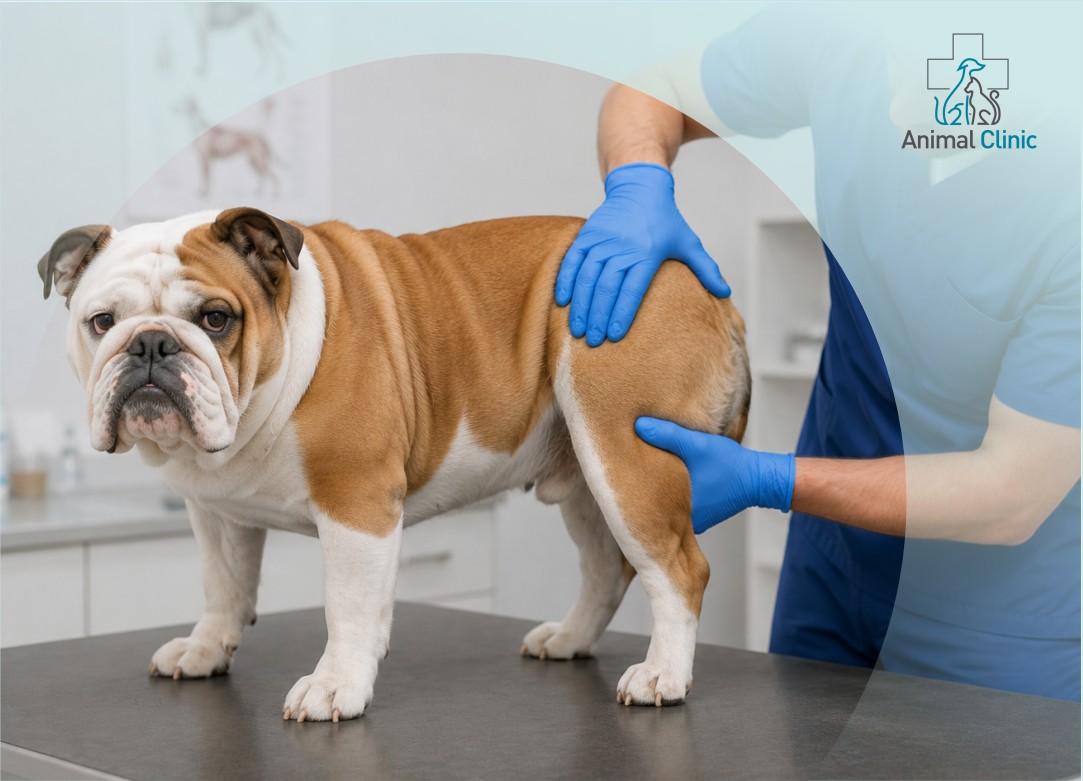
Hip dysplasia is one of the most common musculoskeletal conditions in dogs. It occurs when the hip joint develops abnormally, becoming unstable and gradually deteriorating — a process that leads to osteoarthritis. Don’t let this condition affect your pet’s quality of life: read on to learn how Animal Clinic can help address it.
Why Does Hip Dysplasia Develop?
Hip dysplasia in dogs is a hereditary condition. Large and giant breeds are especially prone to it — think Labradors, German Shepherds, Rottweilers, and Saint Bernards. Several factors can increase the risk:
- Rapid growth during puppyhood.
- An unbalanced diet, overfeeding, or too little or too much calcium.
- Excess body weight.
- Excessive physical activity at a young age.
- Joint injuries.
In other words, genetic predisposition can be made worse by improper care. If the condition can’t be prevented, catching the early warning signs makes a real difference.
Types and Symptoms of Hip Dysplasia
Hip dysplasia in dogs can be unilateral, affecting only one joint, or bilateral, with abnormal changes present in both hip joints.
The condition also varies in severity. Mild cases involve joint instability without obvious clinical signs. Moderate cases show structural changes in the hip joint along with limping. In severe cases, the joint surfaces are noticeably deformed, and the dog’s movement is limited and accompanied by significant pain.
Early signs can appear as soon as a dog’s first year of life, though symptoms may also develop in adulthood. Watch for the following signs of hip dysplasia in dogs:
- Limping after physical activity.
- Difficulty climbing stairs.
- Stiffness after resting or sleeping.
- Loss of interest in favorite activities.
- Swaying of the hindquarters while walking.
- A “bunny hop” gait — pushing off with both hind legs at once.
- Yelping when the affected area is touched.
As the disease progresses, these symptoms become constant, leaving the dog in ongoing discomfort and pain. Pay close attention to any changes in your pet’s condition and behavior, and don’t let them face this alone.
Diagnosing and Treating Hip Dysplasia in Dogs
Only a qualified orthopedic veterinarian can confirm a diagnosis of hip dysplasia. This requires a clinical exam, an assessment of hip joint mobility, and X-rays of the area.
The treatment approach depends on the patient’s age and the severity of the condition. In the early stages, conservative treatment is typically used, including:
- Therapeutic exercise and physical therapy.
- Weight management.
- Activity restriction.
- Anti-inflammatory and pain medication, along with joint supplements (chondroprotectants).
This approach doesn’t cure the condition, but it can significantly improve the dog’s quality of life. The most effective treatment for advanced hip dysplasia is surgery to correct or remove the affected part of the femur.
Prompt veterinary care and an effective treatment plan from a professional can help restore your dog’s mobility — and the joy that comes with it.