
- Main
- News and events
- How to Safely Increase Your Dog’s Activity in Spring
How to Safely Increase Your Dog’s Activity in Spring
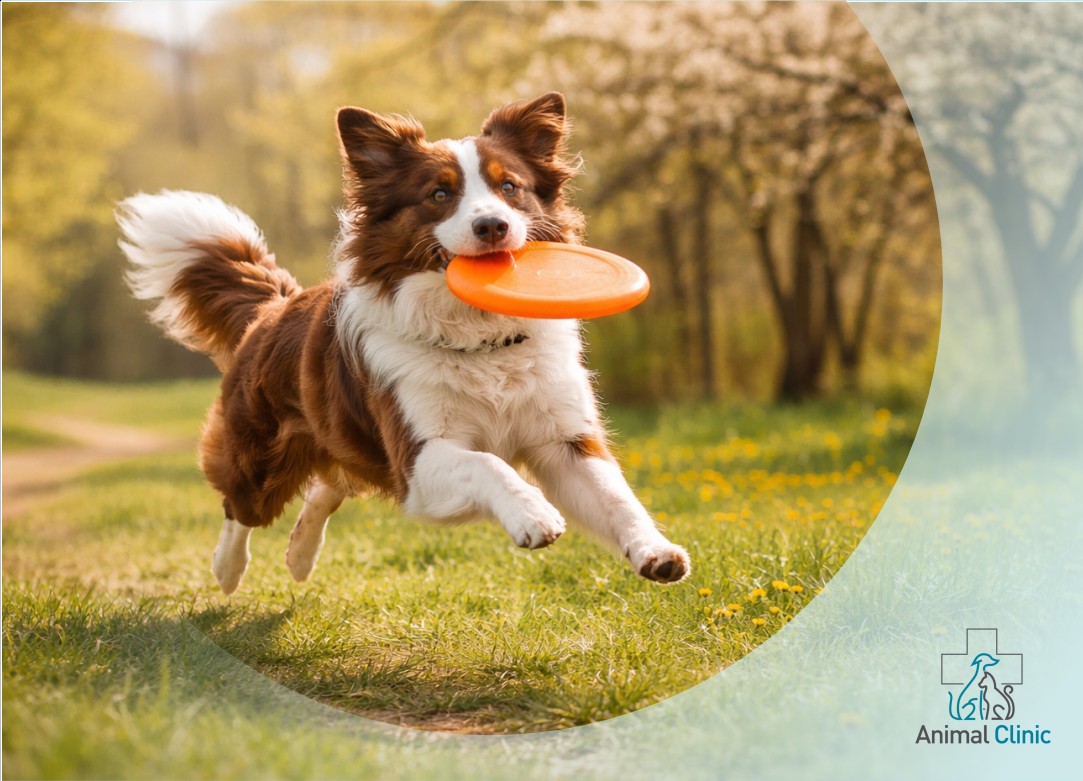
Spring is the time when nature comes back to life. Not only people but also pets need more movement. After reduced winter activity, longer walks and outdoor training can be very beneficial. However, increasing activity levels should be gradual to protect your pet’s health.
Where to Start When Returning to Seasonal Activity
Planning to make your dog’s physical activity more intense? Start by gradually increasing the duration of daily walks. Ideally, add 5–10 minutes every 4 days. This is enough for a smooth, stress-free transition to a more active routine.
In addition, Animal Clinic specialists recommend following these guidelines:
- Add active games to your outdoor routine. This can include running, fetch, ball games, searching for toys, or tug-of-war.
- Vary your walks. Introduce activities that improve coordination, such as obstacle courses. Alternate between active play and longer, steady walks. Choose not only familiar routes but also new ones. This will improve both your dog’s physical fitness and mental stimulation.
- Always include a warm-up and cool-down. Start walks at a slow pace, gradually increase intensity, and finish at a calm, slow pace on the way home.
On cool or rainy spring days, when long walks are less appealing, opt for shorter outings and engage your dog in indoor play. Puzzle toys that dispense food are a great way to keep your pet mentally stimulated.
What to Consider When Adjusting Activity Levels
First of all, consider your dog’s physical condition. During winter, your pet may have gained extra weight and lost fitness, so sudden intense exercise can lead to injuries, joint problems, or strain on the cardiovascular system.
Be sure to take into account your dog’s breed and age. Young and healthy pets usually adapt well to increased activity. However, older dogs and brachycephalic breeds (with flat faces) may struggle with intense exercise. Keep walks slow, allow plenty of rest, and gradually introduce training or low-intensity games.
Always monitor your pet’s condition closely. If you notice signs of fatigue, allow your dog to rest. If you observe shortness of breath, unsteady gait, excessive drooling, or a lack of focus, take your pet immediately to the nearest Animal Clinic for urgent medical care and a thorough examination.