
- Main
- News and events
- Patellar Luxation in Small Dog Breeds
Patellar Luxation in Small Dog Breeds
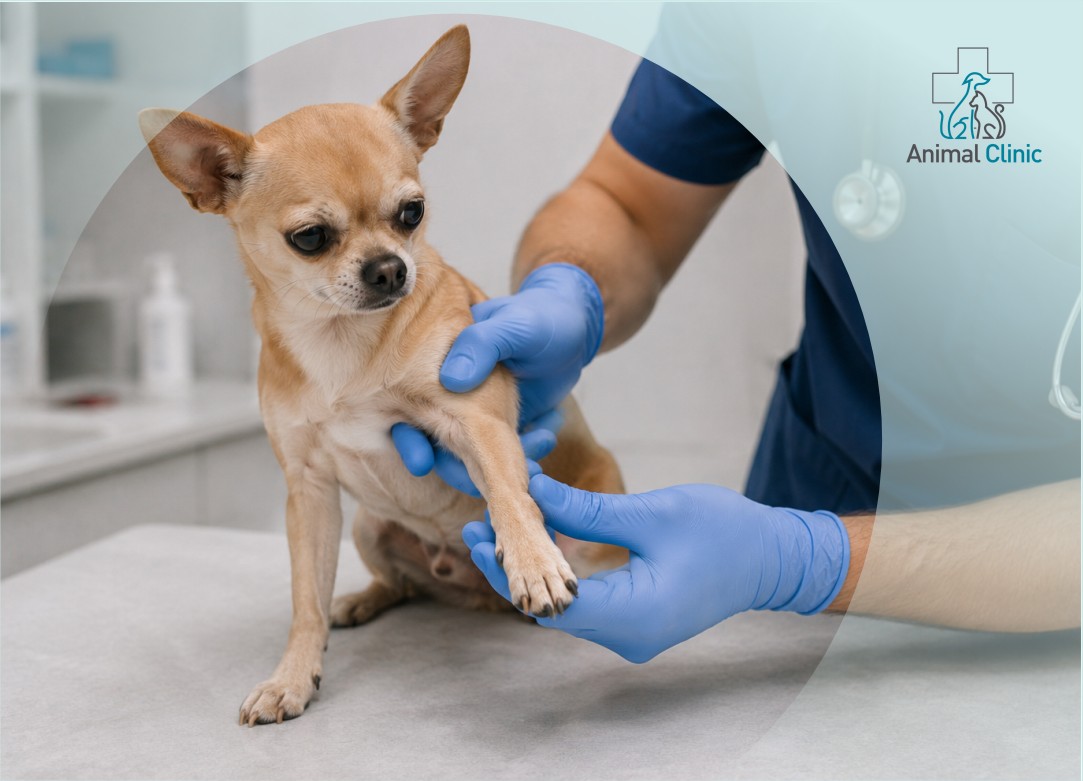
Patellar luxation is one of the most common musculoskeletal conditions in small dog breeds. Chihuahuas, Yorkshire Terriers, Pekingese, Pomeranians, and Prague Ratters are especially prone to it. This condition can significantly affect a dog’s quality of life, and the best way to avoid complications is for owners to stay alert and seek veterinary care promptly.
What Are the Signs of Patellar Luxation?
The kneecap (patella) is a small bone that sits in a groove at the end of the femur, sliding smoothly as the leg bends and straightens when everything is working normally. With patellar luxation — whether congenital or caused by injury — the kneecap shifts out of its normal position, moving inward or outward and affecting mobility. Signs of this joint problem in dogs include:
- Suddenly holding up a leg for a few steps, then walking normally again.
- Intermittent limping.
- A skipping or hopping gait.
- Reluctance to climb up or down stairs.
- An overall drop in activity level.
Patellar luxation is classified by grade. In Grade I, the kneecap only shifts out of place during a physical exam and returns to position on its own. In Grade II, luxation happens during movement, but the kneecap can still return to its normal position. Grade III means the kneecap sits out of place most of the time and can only be repositioned manually. In Grade IV, the most advanced stage, the kneecap remains permanently displaced, and surgery is the only way to restore normal movement. An orthopedic veterinarian can confirm the diagnosis through a clinical exam and X-rays.
Treatment — and Why It Shouldn’t Be Delayed
The treatment approach depends on the grade of the condition, the severity of symptoms, and the dog’s age. For mild cases, conservative treatment is often enough to manage symptoms, including:
- Weight management.
- Therapeutic exercise with moderate activity.
- Physical therapy.
- Anti-inflammatory medication and joint supplements (chondroprotectants), as prescribed by a veterinarian.
However, only surgery can correct the underlying anatomical cause of the luxation. During surgery, the veterinarian repositions the kneecap correctly, which can eliminate pain and limping in dogs long-term.
Seeing an orthopedic veterinarian before the condition progresses gives you the best chance of avoiding osteoarthritis, limb deformity, and a torn cranial cruciate ligament.
Patellar luxation in a Yorkie or another small breed calls for close attention and timely veterinary care. The team at Animal Clinic in Kyiv and the Kyiv region knows how to help your dog stay active and comfortable for years to come.