
- Main
- News and events
- Cat Pregnancy: How to Tell if Your Cat Is Pregnant
Cat Pregnancy: How to Tell if Your Cat Is Pregnant
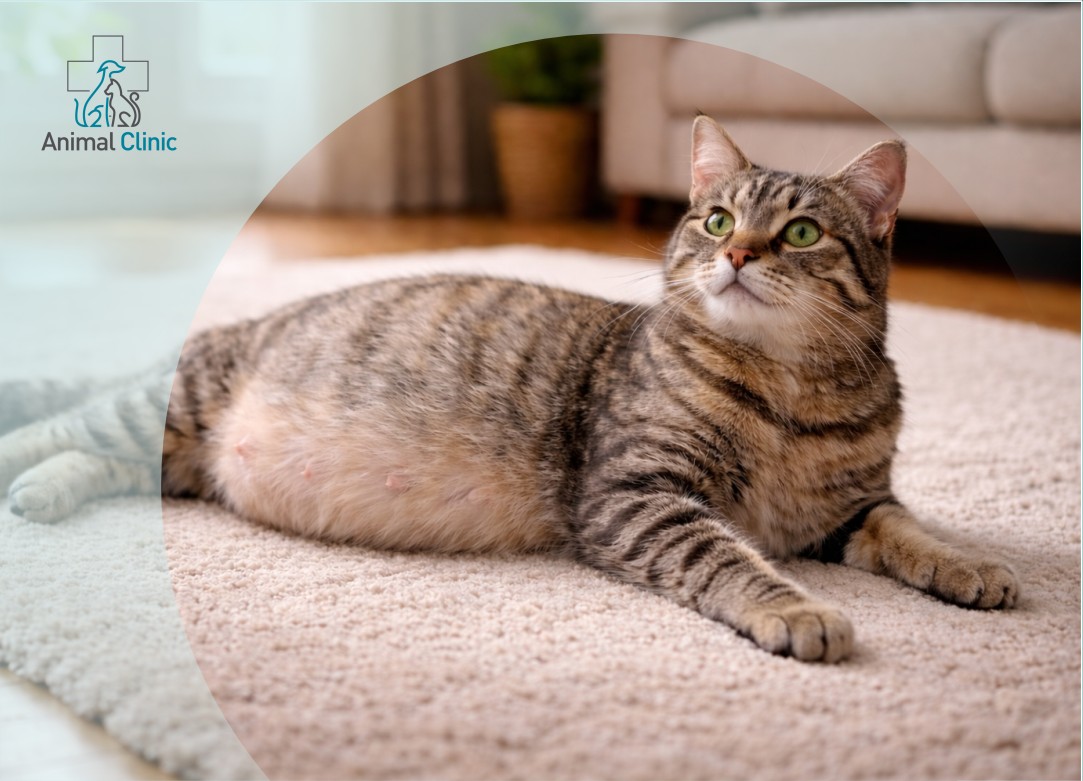
Getting healthy offspring while preserving the well-being of your beloved cat is the main goal of every breeder of purebred cats. To achieve this, it is important to recognize successful fertilization in time, as this allows you to provide the animal with the most comfortable conditions possible. Learn more about how to identify pregnancy in cats in this article created by the veterinary reproduction specialists at Animal Clinic.
Behavioral and Physical Signs of Pregnancy
A caring and observant owner is often the first to suspect that new kittens may soon be on the way. Certain behavioral changes can indicate that a cat is pregnant:
- Increased affection, seeking the owner’s attention, or, conversely, a desire to hide
- Reduced activity and increased sleepiness
- Decreased appetite at first, followed by an increase as the kittens develop
- Mild nausea (this symptom does not occur in all cats)
- Frequent licking of the belly and nipple area
- In later stages — searching for a quiet place for labor or moving objects to build a “nest”
There are also visible physical signs of pregnancy. About 2–3 weeks after fertilization, the nipples become enlarged and pinker. By week 5, the abdomen becomes noticeably larger.
“How long does cat pregnancy last?” is a common question. The average duration is 65 days. However, a female may give birth earlier—from day 58 (this often happens in young cats with multiple kittens)—or later, up to day 72 after fertilization.
During this period, the owner should provide proper care for the pregnant cat:
- Ensure a calm environment — no loud noises, moving to a new home, or introducing new animals
- Feed more nutritious food — ideally food formulated for pregnant cats or kittens
- Prevent jumping from significant heights
- Change the water in bowls daily
- Prepare a place for labor — a spacious box with soft bedding is an excellent option
These are the basic things to take care of once pregnancy is confirmed. However, in breeding, it is important not only to confirm pregnancy but also to ensure that it is progressing normally.
Visiting a Veterinary Reproduction Specialist — The Most Reliable Way to Confirm Pregnancy
Only a veterinary reproduction specialist can confirm pregnancy with complete accuracy. At our network of veterinary centers, Animal Clinic, specialists perform ultrasound examination — the most informative diagnostic method.
Ultrasound can be performed starting from day 21 of pregnancy. This procedure allows the veterinarian to detect embryo heartbeats and assess their viability.
In later stages (days 40–45), X-ray imaging is performed to determine the exact number of kittens, their size, and their position. Consultation for breeders is essential, as it helps identify any special care requirements or the need for additional tests.