
- Main
- News and events
- Autumn Shedding in Dogs and Cats: How to Tell What’s Normal from a Health Problem
Autumn Shedding in Dogs and Cats: How to Tell What’s Normal from a Health Problem
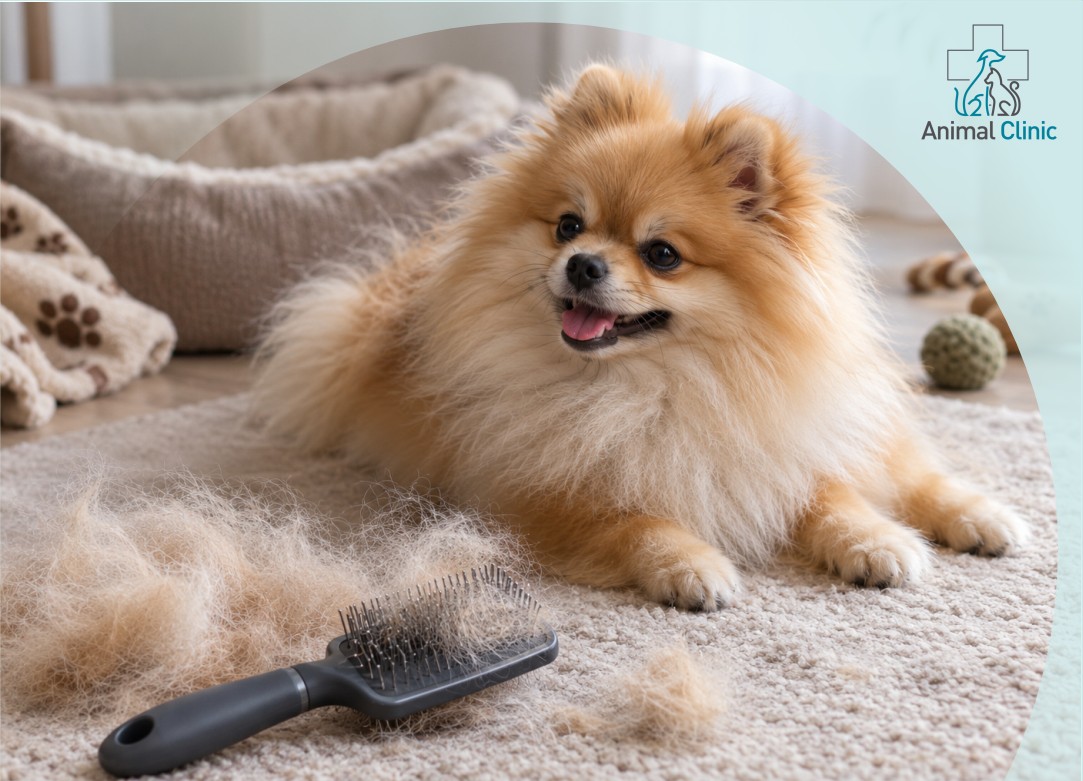
In autumn, many owners notice that their dog or cat begins to shed more hair. In most cases, this is associated with a seasonal change of coat and is a natural process.
However, excessive hair loss cannot always be explained by the season alone. If shedding is accompanied by itching, redness, bald patches, dandruff, an unpleasant odor from the skin, or behavioral changes, you should consult a veterinarian.
The specialists at Animal Clinic explain what normal autumn shedding in dogs and cats looks like and which symptoms may indicate dermatological, parasitic, or other health problems.
Why pets shed in autumn
A dog’s or cat’s coat is constantly renewing itself. The speed of this process is affected by:
- the length of daylight;
- ambient temperature;
- breed;
- coat type;
- living conditions;
- age;
- diet;
- overall health.
Seasonal coat changes are usually more noticeable in animals that spend a lot of time outdoors. Indoor dogs and cats living in consistently warm rooms with artificial lighting may shed less intensely but over a longer period.
Therefore, heavier shedding in autumn does not necessarily mean that your pet is ill.
What normal seasonal shedding looks like
During normal physiological shedding, the coat usually falls out relatively evenly.
The animal:
- maintains its usual activity level;
- eats and drinks normally;
- does not experience severe itching;
- does not scratch its skin until wounds appear;
- does not develop large bald patches;
- does not react painfully to touch;
- does not have pronounced skin redness or rashes.
During normal seasonal shedding, the skin usually looks clean, without significant irritation, weeping areas, or numerous crusts.
If the coat is shedding evenly and your pet’s general condition has not changed, it is most likely a seasonal process.
When hair loss no longer looks like normal shedding
You should consult a veterinarian if hair loss is accompanied by:
- bald patches;
- localized thinning of the coat;
- severe itching;
- frequent licking of one particular area;
- redness;
- rashes;
- dandruff;
- crusts;
- weeping areas;
- an unpleasant odor from the skin;
- wounds caused by scratching;
- changes in skin color or texture;
- brittle hair;
- a sudden deterioration in coat quality.
It is especially important not to delay a veterinary consultation if the symptoms are progressing or the animal is clearly uncomfortable.
Why a dog or cat may experience excessive hair loss
Hair loss can have many causes, so it is not always possible to make an accurate diagnosis based on appearance alone.
Parasites
External parasites are a common cause of itching and coat damage.
These include:
- fleas;
- certain types of mites;
- other skin parasites.
Even a small number of fleas can cause severe itching in a sensitive animal.
At the same time, the owner may not always be able to see the parasites.
Therefore, when evaluating hair loss and itching, the veterinarian will always consider the pet’s history of antiparasitic treatments.
Allergic reactions
Itching and hair loss may be associated with allergic conditions.
The animal may develop:
- redness;
- itching;
- frequent paw licking;
- ear problems;
- rashes;
- skin damage caused by scratching.
It is important to understand that the cause of an allergy cannot always be determined from a single symptom.
Frequently changing the pet’s food or eliminating numerous products without a diagnostic plan may only make it more difficult to assess the animal’s condition.
Fungal and bacterial skin conditions
Some infectious skin conditions may be accompanied by:
- localized hair loss;
- redness;
- flaking;
- crusts;
- an unpleasant odor;
- itching of varying intensity.
Additional veterinary tests may be required to determine the cause.
Improper coat and skin care
Bathing too frequently, using unsuitable cosmetic products, insufficient brushing, or overly aggressive grooming can worsen the condition of the skin and coat.
Dogs and cats should be treated with products specifically designed for animals.
Human shampoos and cosmetics may have ingredients and pH levels that are unsuitable for an animal’s skin.
Diet
Coat health depends on a complete and balanced diet.
An unbalanced diet or a deficiency of certain nutrients can affect the quality of the coat.
However, hair loss does not automatically mean that the animal needs vitamins or supplements.
It is best to consult a veterinarian before using such products.
Hormonal and systemic diseases
Sometimes changes in the coat can be a symptom of a disease that does not originate directly in the skin.
For example, certain endocrine or systemic disorders may affect:
- coat density;
- the rate of hair regrowth;
- skin condition;
- body weight;
- activity level;
- appetite or thirst.
This is why it is important to assess not only the coat but also the animal’s general condition.
Itching is an important warning sign
One of the key signs that helps distinguish normal seasonal shedding from a health problem is the presence of pronounced itching.
If a dog or cat constantly:
- scratches itself;
- chews its coat;
- licks its paws;
- rubs its face;
- scratches its ears;
- licks its abdomen or sides,
this should not be explained solely by seasonal coat changes.
Itching may be associated with parasites, allergies, skin inflammation, or other conditions that require diagnosis.
Why you should not treat skin problems yourself
Owners often try to solve the problem themselves by using:
- a new shampoo;
- antiseptics;
- ointments;
- antifungal products;
- antibiotics;
- antihistamines;
- vitamins.
This approach may temporarily alter the symptoms without addressing the underlying cause.
In addition, self-treatment before an appointment may sometimes make diagnosis more difficult.
If your pet has severe itching, bald patches, or inflamed skin, it is best to begin with a veterinary examination.
What tests may be needed for hair loss
The extent of diagnostic testing depends on the symptoms and the results of the clinical examination.
The veterinarian may recommend:
- an examination of the skin and coat;
- cytological examination;
- tests for parasites;
- additional dermatological tests;
- blood tests;
- other examinations when clinically indicated.
Not every animal requires the same set of tests.
The main objective is to identify the cause of the hair loss or itching.
How to help your pet during normal autumn shedding
If no veterinary problems are present, proper care can make the seasonal coat change easier for your pet.
Brush the coat regularly
How often the coat should be brushed depends on the breed and coat type.
Regular grooming helps remove dead hair and reduces the amount of loose hair in the home.
Provide a complete and balanced diet
A balanced diet containing sufficient protein, fats, vitamins, and trace elements is important for a healthy coat.
Do not add vitamin supplements without veterinary guidance if the animal is already receiving a complete and balanced diet.
Continue parasite protection
Autumn is not a reason to stop antiparasitic treatments.
Fleas and ticks may remain active, while parasite-related itching can easily be mistaken for seasonal shedding.
Use veterinary grooming products
Shampoo and other grooming products should be appropriate for the animal’s species and skin condition.
If your pet has sensitive skin or dermatological problems, it is best to choose grooming products together with a veterinarian.
When to consult a veterinarian about shedding
Schedule a consultation if:
- the coat is falling out in patches;
- bald patches are developing;
- the animal is constantly itching;
- redness or rashes are present;
- the skin has an unpleasant odor;
- crusts or wounds have appeared;
- the ears or paws are affected;
- the animal’s general condition has worsened;
- its weight has changed;
- its thirst has increased;
- the animal has become lethargic;
- the coat is not growing back.
The longer an animal scratches or licks its skin, the greater the risk of secondary damage and inflammation.
If you notice excessive shedding, itching, bald patches, redness, or other skin changes in your dog or cat, contact the veterinarians at Animal Clinic.
At the clinic, your pet can receive an initial examination, have its skin and coat assessed, and, if necessary, receive an appropriate diagnostic plan.
Not every case of autumn shedding requires treatment. However, itching, bald patches, redness, and skin changes are reasons not to wait and to have your pet examined by a veterinarian.
FAQ — common questions about autumn shedding in dogs and cats
How long does autumn shedding last in dogs?
The duration depends on the breed, coat type, living conditions, temperature, and length of daylight. Seasonal shedding varies in intensity among animals, so there is no single duration that applies to every dog.
Why is my dog shedding so heavily in autumn?
The cause may be a natural seasonal coat change. However, if excessive shedding is accompanied by itching, bald patches, dandruff, redness, or other skin changes, parasites, allergies, and dermatological conditions should be ruled out.
Is it normal for a cat to shed in autumn?
Yes. Cats can also experience seasonal coat changes. In indoor cats, shedding may be less pronounced or may continue for a longer period because of the stable indoor temperature and artificial lighting.
When is shedding in a dog a cause for concern?
Warning signs include bald patches, severe itching, redness, wounds, rashes, crusts, an unpleasant skin odor, or deterioration in the animal’s general condition.
Why is my dog shedding and constantly scratching?
Severe itching is not a typical sign of normal seasonal shedding. It may be caused by fleas, mites, allergies, skin inflammation, or other dermatological problems. The exact cause should be determined by a veterinarian.
Can fleas cause hair loss?
Yes. Flea bites can cause itching, while constant scratching or licking damages the coat and skin. Some animals may have a particularly severe reaction.
Should I give my pet vitamins for shedding?
Not always. If a dog or cat receives a complete and balanced diet, additional vitamin supplements may be unnecessary without a specific medical indication. If the coat has become dull or is falling out excessively, it is best to determine the cause with a veterinarian first.
Can I bathe my dog frequently during shedding?
Bathing frequency depends on the coat type, skin condition, and products used. Excessive bathing or an unsuitable shampoo may irritate the skin. If your pet has dermatological problems, the care routine should be discussed with a veterinarian.
What tests are required for excessive hair loss?
There is no universal list of tests. The veterinarian first assesses the skin, coat, presence of itching, and other symptoms. Cytology, parasite testing, blood tests, or other examinations may then be recommended.
Where can I consult a veterinarian about excessive shedding in Kyiv?
Dogs and cats with excessive hair loss, itching, or skin changes can be examined at the Animal Clinic branches in Pozniaky, Osokorky, Pechersk, Sofiivska Borshchahivka, and the urban-type settlement of Borova.