
- Main
- News and events
- Tracheal Collapse in Yorkshire Terriers and Pomeranians: “Goose-Honk” Cough Symptoms and Treatment Options
Tracheal Collapse in Yorkshire Terriers and Pomeranians: “Goose-Honk” Cough Symptoms and Treatment Options
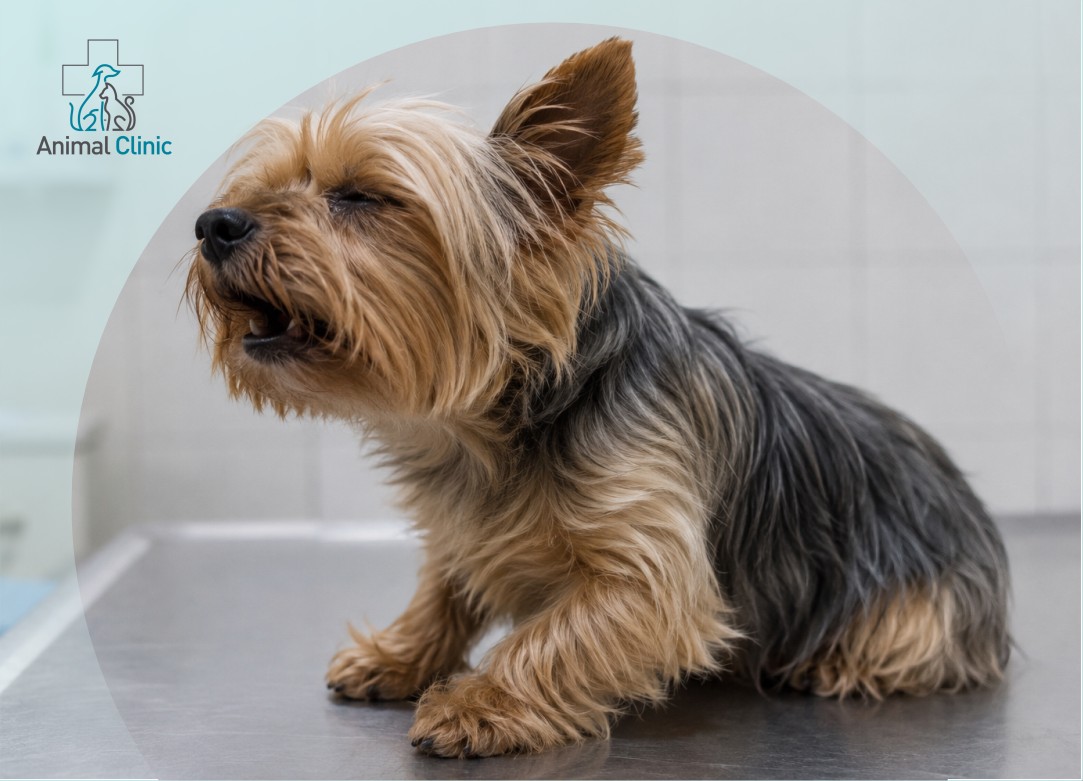
Tracheal collapse is a chronic progressive respiratory disease in which the tracheal cartilage loses its rigidity and collapses during breathing. Small-breed dogs are most commonly affected, including Yorkshire Terriers, Pomeranians, Toy Terriers, and Chihuahuas. The characteristic symptom is a sudden coughing fit that sounds like a “goose honk.”
What Causes Tracheal Collapse?
Normally, the trachea consists of cartilage rings connected by a muscular membrane. In tracheal collapse, the cartilage rings soften and lose their C-shaped form, while the dorsal muscular membrane sags and narrows the tracheal lumen. Causes include genetic predisposition, chronic inflammation, obesity, and excessive pressure on the neck from a tight collar.
Breeds at Increased Risk
- Yorkshire Terrier;
- Pomeranian;
- Chihuahua;
- Toy Terrier;
- Maltese;
- Toy Poodle.
Symptoms of Tracheal Collapse: From Coughing to Asphyxia
-
Stage I — mild narrowing (up to 25%)
Symptoms: coughing when excited or when the leash is pulled.
-
Stage II — moderate narrowing (25–50%)
Symptoms: frequent coughing and shortness of breath after physical activity.
-
Stage III — significant narrowing (50–75%)
Symptoms: chronic coughing, cyanosis of the mucous membranes, and episodes of choking.
-
Stage IV — critical narrowing (more than 75%)
Symptoms: severe respiratory failure, loss of consciousness, and risk of asphyxia.
The cough associated with tracheal collapse is dry and harsh and sounds like a “goose honk.” It becomes worse with excitement, physical activity, eating, or pressure on the neck. Typically, the dog coughs as though trying to clear something from its throat, even though no foreign object is present.
Diagnosing Tracheal Collapse
The main diagnostic methods are an ultrasound examination of the trachea or radiography in two projections. Tracheoscopy—an endoscopic examination of the trachea—is considered the gold standard because it allows the veterinarian to assess the degree of collapse and the condition of the mucous membrane. At Animal Clinic, diagnosis is performed by veterinary physicians using modern equipment.
Conservative Treatment
At stages I–II, treatment primarily involves medication and changes in the dog’s care:
- replacing the collar with a harness (essential!);
- weight control, as obesity worsens the symptoms;
- cough suppressants such as butamirate or codeine, as prescribed by a veterinarian;
- bronchodilators such as theophylline or terbutaline to reduce airway spasms;
- corticosteroids such as prednisolone for severe inflammation;
- sedatives in cases of intense excitement;
- ACE inhibitors such as enalapril when cardiomyopathy is also present.
Surgical Treatment: Tracheal Stenting
At stages III–IV, when medication no longer controls the symptoms, surgical treatment is indicated. The most effective method is tracheal endoprosthesis placement, or stenting. A stent is a metal mesh tube that expands the trachea from within and restores airflow.
Advantages of Tracheal Stenting
- minimally invasive procedure performed endoscopically without incisions;
- immediate restoration of breathing;
- short hospitalization period of 1–2 days;
- no external scars.
The procedure is performed in the Animal Clinic surgery department. Regular follow-up is required after stenting, including chest radiography every 3–6 months.
Prognosis and Quality of Life
Tracheal collapse is a chronic condition, and complete recovery is not possible. However, with appropriate treatment and care, most dogs can live full and active lives. It is important to avoid triggers such as heat, humidity, smoke, strong odors, and excessive physical activity. Regular veterinary examinations help monitor the condition.
If your dog begins coughing with a “goose-honk” sound, do not delay—schedule a veterinary consultation. The earlier tracheal collapse is diagnosed, the more effective the treatment and the better your pet’s quality of life.
Frequently Asked Questions About Tracheal Collapse in Dogs
What Is Tracheal Collapse in Dogs?
Tracheal collapse is a narrowing of the tracheal lumen caused by weakening of the tracheal cartilage. It most commonly affects small-breed dogs, including Yorkshire Terriers, Pomeranians, and Chihuahuas.
What Does a Tracheal Collapse Cough Sound Like?
The cough is dry and harsh and resembles a “goose honk.” It becomes worse with excitement, physical activity, pressure on the neck, or eating.
How Is Tracheal Collapse Treated in a Yorkshire Terrier?
Early stages are managed with conservative treatment, including cough suppressants, bronchodilators, a harness instead of a collar, and weight control. Advanced stages may require tracheal stenting.
Is Tracheal Collapse Life-Threatening?
At stages III–IV, tracheal collapse can lead to severe respiratory failure and asphyxia. Timely treatment significantly improves the prognosis.
Can Tracheal Collapse Be Treated Without Surgery?
At stages I–II, conservative treatment may control the symptoms. Complete recovery is not possible because the tracheal cartilage does not regenerate. Surgery is required if the condition progresses.
How Is Tracheal Collapse Diagnosed?
The primary method is radiography of the cervical region in two projections. The gold standard is tracheoscopy performed under sedation. Tracheal ultrasound can also provide useful diagnostic information.
Is It Necessary to Replace a Collar with a Harness?
Yes. This is a primary measure. A collar places pressure on the neck and can trigger coughing. A harness distributes the load evenly across the chest and reduces pressure on the trachea.
What Is the Prognosis After Tracheal Stenting?
The prognosis is good: breathing is restored immediately after stenting. However, the stent requires monitoring with radiography every 3–6 months. Possible complications include stent displacement and the formation of granulation tissue.
Can a Dog Suffocate During a Coughing Fit?
At stage IV, episodes of severe respiratory distress with loss of consciousness may occur. Emergency veterinary care is required in such cases. Keep veterinarian-prescribed sedative medication at home.
Do Home Remedies Help with Tracheal Collapse?
No. Home remedies such as honey, lemon, or warm milk do not affect the mechanism of the disease. Some remedies may make the coughing worse. Treatment must be prescribed by a veterinarian.
How Can I Book an Appointment at Animal Clinic?
You can book a consultation with an Animal Clinic veterinary physician or surgeon by calling (044) 333 95 63 or (067) 333 95 63, or through the website. We will perform a complete diagnostic assessment and recommend an appropriate treatment plan.