
- Main
- News and events
- Cold Weather and Joint Health in Dogs and Cats: Symptoms You Shouldn’t Dismiss as Signs of Ageing
Cold Weather and Joint Health in Dogs and Cats: Symptoms You Shouldn’t Dismiss as Signs of Ageing
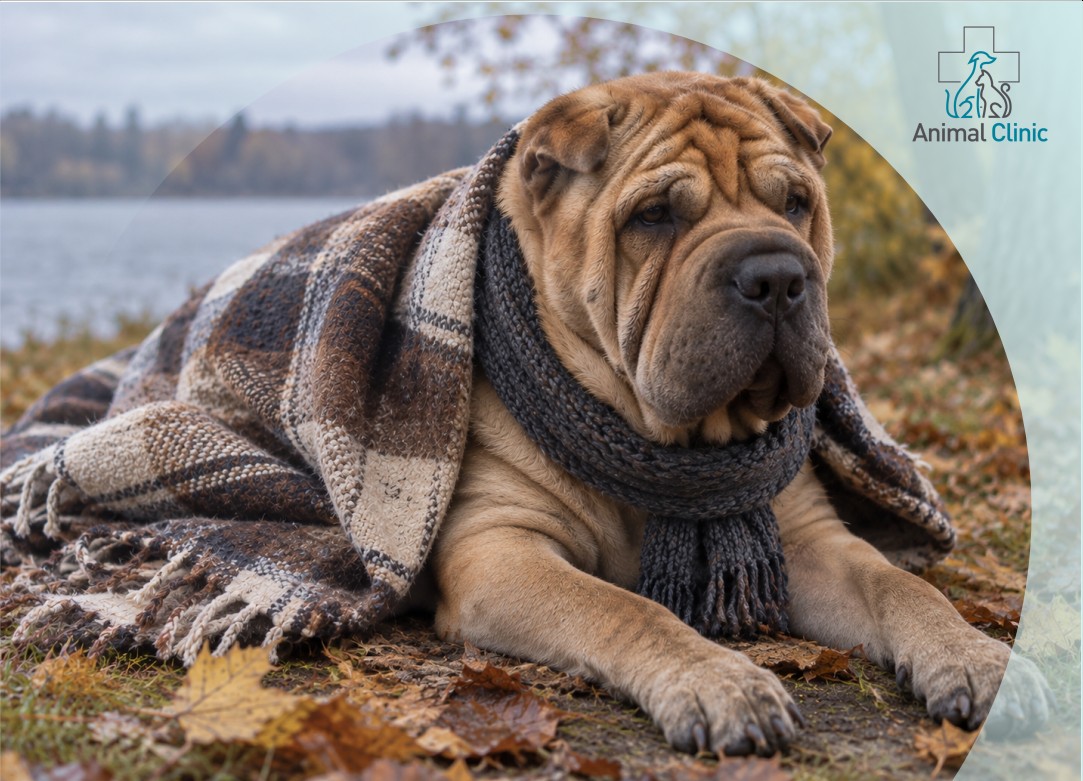
With the arrival of cold and damp weather, some owners notice that their dog gets up more slowly after sleeping, is reluctant to go for a walk, avoids stairs, or begins to limp. Changes in cats may be less obvious: the animal may stop jumping onto its favourite windowsill, play less, or spend more time in its bed.
These changes may be particularly noticeable in animals that already have joint or spinal diseases, previous injuries, or other musculoskeletal problems.
It is important to understand that cold weather should not be treated as a universal explanation for pain or lameness. If your pet’s mobility has changed, the cause should be identified.
Veterinarians at Animal Clinic explain which symptoms to look out for in autumn and when a dog or cat should be examined by a veterinarian.
Does Cold Weather Really Affect an Animal’s Joints?
Animals with existing orthopaedic problems may show greater stiffness or reluctance to move during colder periods.
The animal’s condition may be affected by several factors at the same time:
- lower temperatures;
- humidity;
- reduced physical activity;
- shorter walks;
- longer periods of rest;
- weight gain;
- slippery surfaces;
- sudden exercise after a period of inactivity.
For this reason, owners may notice signs in autumn and winter that were less pronounced during summer.
However, you should not automatically assume that the problem is “just because of the weather.” Lameness or pain may be associated with a completely different condition.
Which Animals Require Particular Attention?
Mobility should be monitored especially carefully in dogs and cats that:
- are older;
- are overweight;
- have osteoarthritis;
- have undergone orthopaedic surgery;
- have previously been injured;
- have spinal diseases;
- have ligament or joint disorders;
- belong to large or giant breeds;
- have previously diagnosed orthopaedic problems.
However, musculoskeletal problems can also occur in young animals.
Therefore, age is not the only risk factor.
1. The Dog Has Difficulty Getting Up After Sleeping
One symptom that owners often associate with ageing is stiffness after rest.
The dog may:
- take a long time to get up from its bed;
- move cautiously during the first few steps;
- be reluctant to go for a morning walk;
- appear slightly more active after it starts moving.
This pattern may occur with joint diseases and other musculoskeletal problems.
If this behaviour is repeated, tell your veterinarian about it.
2. Lameness
Lameness in a dog or cat is not normal, regardless of the animal’s age.
Possible causes include:
- an injury;
- damage to a paw pad;
- a claw problem;
- a foreign object;
- a sprain;
- ligament damage;
- a joint disorder;
- spinal changes;
- a neurological problem.
Sometimes lameness appears only after a long walk, after sleeping, or when the animal first goes outside into the cold.
It is important to remember these details and tell the veterinarian about them.
If the lameness recurs, worsens, or the animal does not put any weight on the limb, the examination should not be postponed.
3. Refusal to Use Stairs or Jump
Cat owners often do not notice obvious lameness but observe another change: the cat stops jumping onto places it previously reached without difficulty.
The cat may:
- choose lower surfaces;
- stop jumping onto the windowsill;
- take a long time to prepare for a jump;
- use intermediate objects as a “step”;
- climb onto furniture less frequently.
In dogs, a typical sign may be a reluctance to:
- use stairs;
- jump into a car;
- climb onto a sofa;
- run and play actively.
This may be a sign of pain rather than simply “laziness.”
4. Reduced Activity
Many animals do become calmer as they age. However, a sudden or gradual reduction in activity requires attention.
Pay attention if your dog:
- wants to return home earlier;
- falls behind during walks;
- gets tired quickly;
- plays less;
- needs more time to recover after exercise.
A cat may show changes in:
- how often it plays;
- the routes it uses around the home;
- its preferred sleeping places;
- its willingness to interact with the owner.
Chronic pain often manifests not through loud whining but through gradual changes in behaviour.
5. Pain When Touched
The animal may begin reacting negatively when the following areas are touched:
- the paws;
- the pelvis;
- the back;
- the neck;
- the joints.
A dog may pull its paw away, become tense, or avoid contact.
A cat may hiss, try to escape, or suddenly refuse to let the owner stroke a particular area.
A sudden aggressive reaction in a previously calm animal may also sometimes be associated with pain.
Why You Should Not Say “It’s Just Old Age”
The phrase “he is simply getting old” often leads owners to wait too long before seeking help.
Ageing itself should not mean that the animal is in constant pain.
Changes in mobility may be caused by:
- osteoarthritis;
- spinal problems;
- joint diseases;
- ligament damage;
- old injuries;
- neurological disorders;
- other diseases.
The sooner the cause of discomfort is identified, the more opportunities there are to select appropriate support and preserve the animal’s comfort.
Osteoarthritis in Dogs and Cats
Osteoarthritis is a chronic joint disease involving progressive changes to joint structures that may cause pain and restricted mobility.
In dogs, owners more commonly notice:
- lameness;
- stiffness;
- reluctance to run;
- difficulty getting up.
Symptoms in cats are often less obvious.
The cat may simply:
- sleep more;
- jump less;
- avoid high surfaces;
- change its behaviour;
- groom certain areas of its body less effectively.
Assessing lifestyle and behaviour is therefore particularly important when examining senior cats.
Excess Weight and Joint Health
Excess body weight creates additional mechanical strain on the musculoskeletal system.
The risk of weight gain may increase during autumn and winter because of:
- shorter walks;
- reduced activity;
- maintaining the same calorie intake;
- giving more treats.
Weight management is a particularly important part of care for animals with joint diseases.
Do not sharply restrict your pet’s diet without professional guidance. The appropriate calorie intake and rate of weight loss should be determined together with a veterinarian.
How to Help Your Pet During the Cold Season
If your dog or cat already has a musculoskeletal problem, simple adjustments at home can help make everyday life more comfortable.
Avoid Sudden Physical Exertion
After a long period of rest, the animal should not immediately begin running actively or playing intensively.
Start walks calmly and gradually increase the pace.
Maintain Regular Activity
Completely stopping physical activity without a veterinarian’s recommendation is not an optimal solution for most chronic orthopaedic problems.
The activity routine should be appropriate for the individual animal’s condition.
Watch Out for Slippery Surfaces
Laminate flooring, tiles, and other smooth surfaces can be particularly difficult for dogs with joint problems.
Rugs or floor coverings that provide better traction may make movement easier.
Provide a Comfortable Resting Place
The animal’s bed should be dry, comfortable, and positioned so that the pet does not have to jump repeatedly or overcome difficult obstacles.
Monitor Your Pet’s Weight
Even a small amount of excess weight can be significant for an animal with orthopaedic problems.
What Not to Do When Your Pet Has Joint Pain
One of the most important recommendations is to never give an animal human pain medication without veterinary guidance.
Medicines commonly used by people may be dangerous or toxic to dogs and especially cats.
You should also avoid:
- administering anti-inflammatory medication without veterinary advice;
- changing the dosage of prescribed medication;
- giving medication prescribed for another animal;
- using supplements instead of obtaining a diagnosis.
The treatment plan should be selected by a veterinarian after evaluating the patient.
When Urgent Veterinary Care Is Needed
Do not postpone the examination if:
- the animal does not put any weight on the paw;
- lameness appeared after an injury;
- there is pronounced swelling;
- the animal shows a strong pain response;
- the limb is in an unnatural position;
- weakness of the hind limbs has appeared;
- the animal cannot stand up without assistance;
- coordination has become impaired;
- the pain is rapidly worsening.
In these situations, do not wait to see whether the animal feels better after resting.
What You Can Do Before Visiting the Veterinarian
If the lameness is intermittent, record it on video.
It is useful to note:
- when the symptom first appeared;
- whether it is worse after sleeping or after exercise;
- which paw is affected;
- whether there was an injury;
- whether the animal’s activity has changed;
- which medications the animal receives.
A video of the animal walking at home or outside can be very useful because stress may cause a pet to move differently during the appointment.
If your dog has begun limping, has difficulty getting up, refuses to use stairs, or shows other changes in mobility, arrange an examination at Animal Clinic.
The veterinarian will assess the animal’s condition and determine the next diagnostic steps if necessary.
Do not attribute lameness, stiffness, or reluctance to move solely to cold weather or age. A change in mobility may be the animal’s way of showing that it is experiencing pain.
FAQ — Cold Weather, Joints, and Lameness in Dogs and Cats
Why did my dog start limping in autumn?
Lameness may be associated with an injury, joint disease, ligament damage, or a problem affecting the paw, spine, or another structure. Symptoms of an existing condition may become more noticeable during the cold season, but the cause can only be determined after an examination.
Can cold weather cause joint pain in dogs?
Owners may notice stiffness and discomfort more frequently during cold weather in animals with existing joint diseases. However, cold should not be considered the only cause of pain — orthopaedic and other diseases should be ruled out.
Why does an older dog have difficulty getting up after sleeping?
Possible causes include osteoarthritis, joint pain, spinal problems, muscle weakness, or other diseases. Age alone is not an adequate explanation for pronounced stiffness.
How can I tell whether my cat has joint pain?
The cat may jump less, avoid high surfaces, sleep longer, play less frequently, or change the way it moves or grooms itself. These changes should be discussed with a veterinarian.
Can I walk my dog if it has arthritis?
In many cases, moderate regular activity is part of supporting the animal, but the duration and intensity of exercise should be appropriate for its condition. The individual activity routine should be determined with a veterinarian.
Should a dog with joint problems wear clothing in autumn?
The need for clothing depends on the breed, coat type, temperature, health, and duration of the walk. Clothing does not treat joint disease, but it may help some animals remain comfortable in cold weather.
Can I give my dog ibuprofen or another human painkiller?
No. Do not give dogs or cats human pain medication unless it has been prescribed by a veterinarian. Some human medicines can cause serious poisoning and damage to internal organs.
Why has my dog stopped using stairs?
Possible causes include pain in the joints or spine, an injury, weakness, or a neurological problem. If the behaviour appeared suddenly or is progressing, the animal requires a veterinary examination.
When does lameness in a dog require an urgent examination?
Seek urgent veterinary care if the dog does not put weight on the limb, has severe pain, swelling, an injury, an abnormally positioned paw, limb weakness, or cannot stand up without assistance.
Where can I take a limping dog for an examination in Kyiv?
Veterinary examinations for lameness, stiffness, or pain are available at Animal Clinic in Pozniaky, Osokorky, Pechersk, Sofiivska Borshchahivka, and the urban-type settlement of Borova. After examining the animal, the veterinarian will determine whether radiography or other diagnostic tests are required.