
- Main
- News and events
- Autumn Paw Care: How to Protect Paw Pads from Cracks and Irritation
Autumn Paw Care: How to Protect Paw Pads from Cracks and Irritation
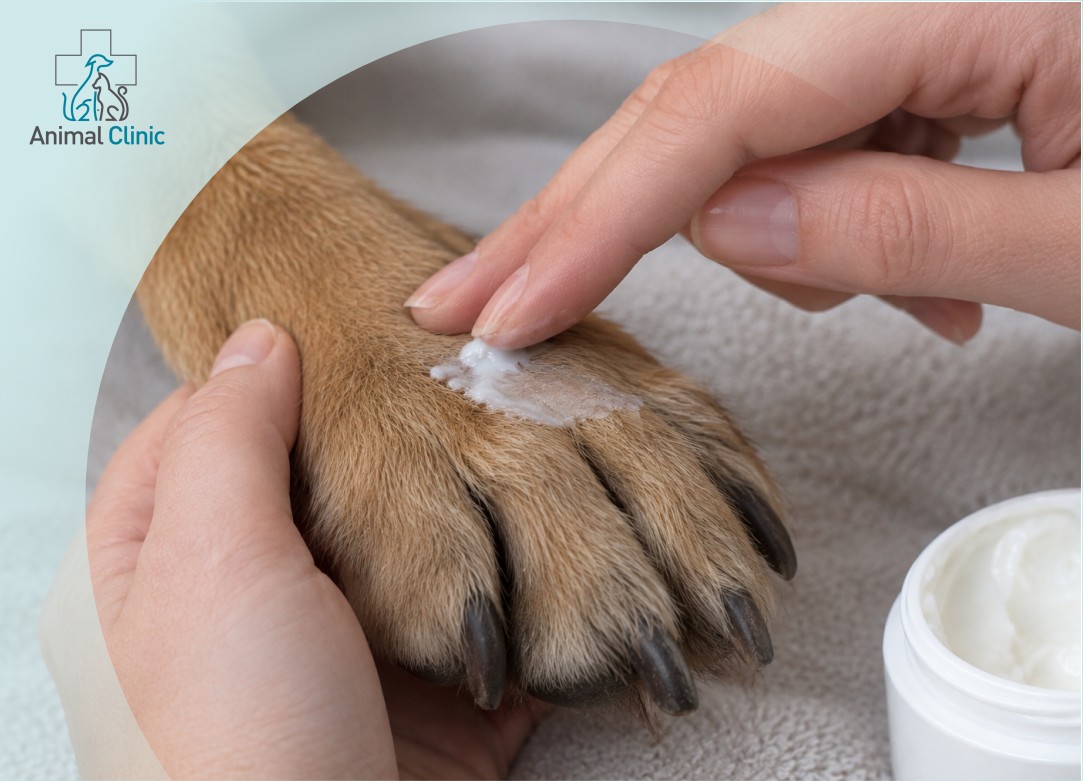
Autumn walks mean rain, puddles, wet grass, mud, and constant contact between the paws and damp surfaces. For many dogs, this is an ordinary part of daily life, but under certain conditions the paw pads and the skin between the toes can become irritated, dry, or injured.
Owners may notice that their dog is licking its paws more often, is reluctant to put weight on one paw, or has redness between the toes. Sometimes the problem is limited to mild dryness, but cracks, pain, swelling, or discharge require closer attention.
The veterinarians at Animal Clinic explain how to care for your pet’s paws after autumn walks, when home care may be sufficient, and when the animal should be examined by a veterinarian.
Why paws are particularly vulnerable in autumn
Paw pads are designed for contact with the ground and are well suited to daily activity. However, constant moisture, dirt, and mechanical friction can negatively affect their condition.
In autumn, the risk of irritation may increase because of:
- long walks on wet surfaces;
- constantly damp fur between the toes;
- dirt and sand;
- small stones or other foreign objects;
- sudden temperature changes;
- excessive washing;
- unsuitable cleaning products;
- excessively dry skin.
In dogs with long fur on their paws, moisture may remain between the toes for longer. These animals therefore require particularly thorough drying after a walk.
How to wash your dog’s paws properly after a walk
It is not necessary to use shampoo after every walk.
In most cases, rinsing away the dirt with clean water at a comfortable temperature is sufficient.
The recommended routine is:
- Inspect the paws.
- Rinse off the dirt with water.
- Check the areas between the toes.
- Gently pat the paws dry with a towel.
- Thoroughly dry the fur between the toes.
If the dog has walked on a very dirty surface, you can use a veterinary paw-care product, but it must be suitable for animals and should not dry out the skin.
Why thorough drying is important
One common autumn mistake is washing the paws and leaving the fur between the toes damp.
Prolonged moisture can contribute to:
- skin irritation;
- maceration;
- redness;
- discomfort;
- secondary inflammation.
The paws of long-haired dogs and animals already prone to dermatological problems should be dried particularly carefully.
What to check after every walk
A quick inspection takes only a few minutes.
Look for:
- cracks;
- cuts;
- scratches;
- redness;
- swelling;
- foreign objects;
- damaged claws;
- problems between the toes;
- excessive licking.
If your dog suddenly begins limping after a walk, first examine the paw pads, claws, and the spaces between the toes.
Dry paw pads: normal or a problem?
A dog’s paw pads should not be completely smooth like human skin. Their surface is naturally denser and rougher.
However, excessive dryness may appear as:
- flaking;
- rough edges;
- small cracks;
- increased sensitivity;
- discomfort while walking.
The weather is not the only possible cause.
The condition of the paw pads may also change because of:
- excessive cleaning;
- unsuitable grooming products;
- mechanical stress;
- dermatological conditions;
- other skin disorders.
If the dryness is severe or keeps returning, it is best to discuss it with a veterinarian.
What can be used to moisturize paw pads?
Products specifically intended for animals should be used for paw care.
These may include veterinary:
- balms;
- waxes;
- paw-pad creams.
Before using a product for the first time, check its ingredients and make sure it is safe if the animal licks it.
Do not use random human creams, especially products containing fragrances, essential oils, or active ingredients, without consulting a veterinarian.
Cracked paw pads: what to do
Small, superficial cracks may develop because of dryness or physical stress.
If the crack:
- is shallow;
- is not bleeding;
- is not painful;
- is not accompanied by swelling;
- has no discharge,
you can gently keep the paw clean and use a veterinary protective product.
However, if the crack is deep, painful, or bleeding, the animal should be examined by a veterinarian.
Do not attempt to seal deep injuries yourself or apply harsh antiseptics.
What to do if there is redness between the toes
Redness between the toes can have various causes.
Possible causes include:
- irritation after a walk;
- a foreign object;
- an allergic reaction;
- bacterial or fungal inflammation;
- an injury;
- parasites;
- constant licking.
If the redness does not disappear, becomes worse, or the dog constantly chews its paw, a veterinary examination is needed.
Constant licking can further damage the skin and maintain the inflammation.
Why does a dog constantly lick its paws?
Briefly licking the paws after a walk may be normal grooming behavior.
However, it may indicate a problem if the dog:
- constantly licks one paw;
- chews its toes;
- wakes up at night because of itching;
- has redness;
- is losing fur on its paws.
The causes can range from a foreign object to an allergy or dermatological condition.
It is therefore important not only to stop the dog from licking its paw but also to determine why it is doing so.
Foreign objects after a walk
Autumn walks often take place through grass, fallen leaves, or uneven terrain.
The following may become lodged between the toes or in a paw pad:
- thorns;
- small fragments;
- plant seeds;
- small stones;
- other foreign objects.
If an object is superficial and can be removed easily without causing pain, you may carefully take it out.
However, if it has penetrated deeply, the paw is swollen, or the animal will not allow the paw to be touched, do not attempt to dig into the tissue yourself. Contact a veterinarian.
What not to do when paws are irritated
Without a veterinarian’s instructions, you should not:
- apply alcohol;
- use hydrogen peroxide regularly;
- use concentrated antiseptics;
- apply human ointments;
- use steroid creams;
- give antibiotics;
- keep the paw constantly covered with a tight bandage.
Some products may dry out or irritate the skin, while self-treatment can conceal the symptoms of an underlying condition.
Should the fur between the toes be trimmed?
For some dogs, carefully shortening excess fur between the paw pads can make paw care easier.
This can help owners:
- see the condition of the skin more clearly;
- remove dirt more easily;
- dry the paws more quickly;
- reduce moisture accumulation.
The fur should not be trimmed aggressively or in a way that may injure the skin.
If you are unsure, it is better to leave this to a groomer or ask a veterinarian for advice.
How to care for a cat’s paws
Indoor cats generally do not need their paws washed regularly if they do not go outside.
However, owners should periodically inspect:
- the paw pads;
- the claws;
- the areas between the toes.
If a cat suddenly begins frequently licking one paw, starts limping, or does not allow the limb to be touched, it should also be examined by a veterinarian.
Paw care: a simple autumn checklist
After a walk:
- inspect the paws;
- rinse away dirt with water;
- check the areas between the toes;
- dry the paws thoroughly;
- check for cracks and wounds;
- watch for excessive licking;
- use a veterinary paw-pad balm if necessary.
Regular, simple care helps owners notice changes promptly and prevent irritation from becoming worse.
If your pet develops cracked paw pads, redness between the toes, limping, or constant paw licking, arrange an examination at Animal Clinic.
A veterinarian will assess the condition of the skin, paw pads, and claws and, if necessary, determine an appropriate diagnostic plan.
If your pet’s paws have become sensitive, cracks have appeared, or your dog constantly licks them, do not assume that wet weather is the only cause. It is better to identify the underlying problem.
FAQ — autumn paw care for dogs
Should I wash my dog’s paws after every walk?
If the paws are dirty, they should be cleaned. In most cases, clean water is sufficient. Using shampoo constantly when it is not needed may dry out the skin.
Why are my dog’s paw pads cracking?
Possible causes include dryness, mechanical stress, frequent washing, irritation, or dermatological conditions. Deep, painful, or bleeding cracks require a veterinary examination.
What can I apply to my dog’s dry paw pads?
It is best to use veterinary balms or waxes specifically intended for paws. The product must be safe for animals, including if it is accidentally licked.
Why does my dog lick its paws after a walk?
The cause may be dirt, irritation, a foreign object, itching, or an allergic reaction. If the licking is constant or accompanied by redness, the animal should be examined by a veterinarian.
What should I do if the skin between my dog’s toes is red?
Rinse the paw with water, dry it thoroughly, and check for a foreign object. If the redness does not resolve, or if there is swelling, pain, or constant licking, a veterinary examination is needed.
Can hydrogen peroxide be used on cracked paw pads?
Regular use of hydrogen peroxide or other harsh antiseptics without veterinary advice may irritate the tissue and slow healing. It is better to use products recommended for the specific type of injury.
Should I dry my dog’s paws with a hair dryer?
Usually, thoroughly patting the paws dry with a towel is sufficient. If the fur is very long and remains damp, a hair dryer may be used at a comfortable temperature without overheating the skin or frightening the animal.
Why is my dog limping after a walk?
The cause may be a crack, cut, foreign object, claw injury, sprain, or another orthopedic problem. If the limping does not resolve or the animal refuses to put weight on the paw, contact a veterinarian.
Can I use human hand cream on my dog’s paws?
It is best not to use human creams without a veterinarian’s recommendation. They may contain ingredients that are unsafe if licked or that may irritate the skin.
Where can I seek help for cracked and irritated dog paws in Kyiv?
Your pet can be examined at Animal Clinic in Pozniaky, Osokorky, Pechersk, Sofiivska Borshchahivka, or the urban-type settlement of Borova. A veterinarian will help determine whether the problem is related to dryness, an injury, a dermatological condition, or another cause.