
- Main
- News and events
- Do Pregnant Dogs and Cats Need Ultrasound?
Do Pregnant Dogs and Cats Need Ultrasound?
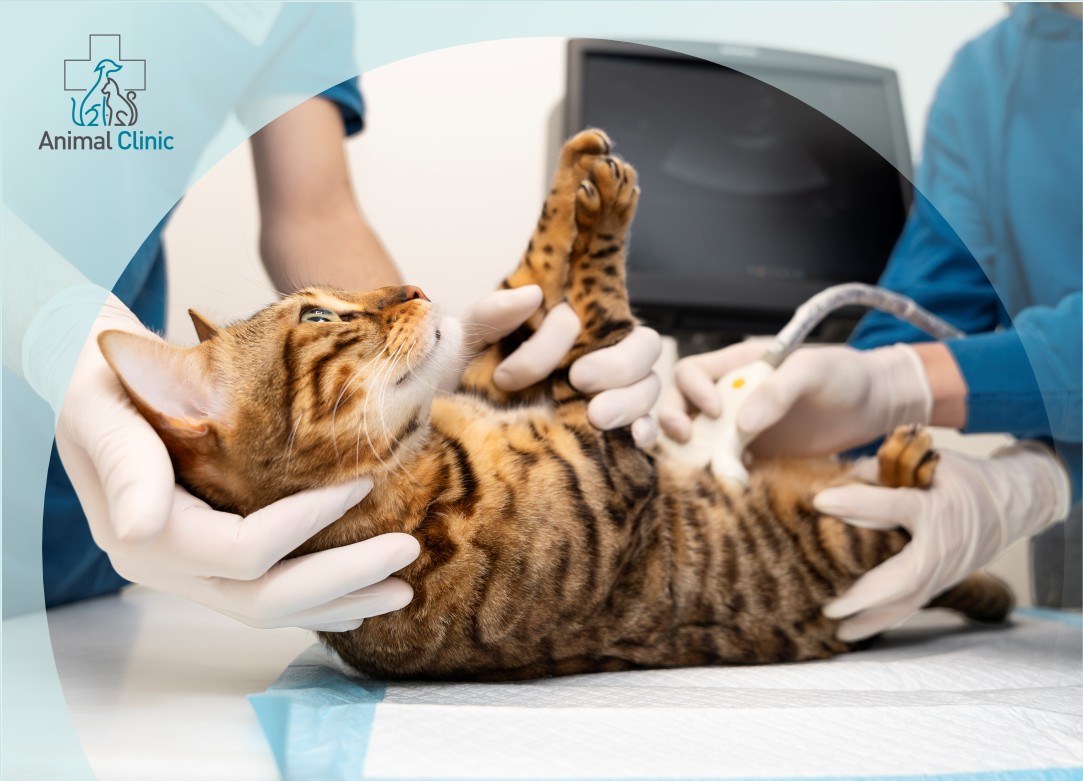
For a responsible breeder, the health of the mother and her future offspring is the highest priority. Preserving it is possible thanks to modern diagnostic methods, one of which is ultrasound examination. But is it truly safe, and is there really a reason to perform pregnancy ultrasound in dogs and cats? Learn the expert opinion of the veterinary specialists at Animal Clinic.
Why Perform Pregnancy Ultrasound for Dogs and Cats?
Ultrasound is widely used in veterinary medicine today because it is completely safe, painless, informative, and non-invasive.
Ultrasound for a pregnant cat or dog is usually performed for the following reasons:
1. Early Confirmation of Pregnancy
Modern equipment allows specialists to detect embryos as early as 21 days after fertilization in both cats and dogs.
This gives the owner enough time to adjust the pet’s care and provide optimal conditions for healthy fetal development.
2. Preliminary Counting of Fetuses
With ultrasound, the owner can get an approximate idea of how many puppies or kittens to expect. This helps better prepare for labor and organize the birthing process properly.
3. Monitoring How Pregnancy Is Progressing
This includes not only checking fetal heartbeats but also assessing overall viability and ruling out common complications.
Visualization of the uterus helps determine whether the pregnancy is progressing normally, whether there is fetal death, developmental abnormalities, or other pathological conditions.
4. Monitoring the Condition of the Fetuses and Uterus in Late Pregnancy
Pregnancy in dogs and cats progresses relatively quickly. That is why it is important not to miss potential problems and, if necessary, provide timely medical care.
Ultrasound plays a major role in early detection and prevention of serious complications.
Advice from a Veterinary Reproduction Specialist
Pet owners in Kyiv and the Kyiv region trust the team at Animal Clinic to monitor the health of both the mother and her future offspring.
Our veterinary reproduction specialist recommends the following:
-
Do not be afraid to bring your pet for an ultrasound.
This procedure can be safely performed multiple times during pregnancy without causing harm. However, it should not be done simply out of curiosity. The first scan is for pregnancy confirmation, and follow-up scans should be performed only as recommended by your veterinarian. -
Every pregnant female should have an ultrasound.
This applies not only to animals with a history of pregnancy complications but to all pregnant dogs and cats. -
Trust only qualified professionals.
Diagnostics must be performed carefully and gently. Results should be interpreted by a qualified veterinary obstetrics specialist who can assess the full clinical picture. -
Additional X-rays may be needed.
For an accurate count of fetuses, radiography may be recommended later in pregnancy, when fetal skeletons become mineralized and clearly visible.
For more detailed information about necessary examinations and proper pregnancy care, please contact Animal Clinic using the phone numbers listed in the “Contacts” section. Breeder consultations regarding suspicious symptoms and other concerns are available both by phone and online.