
- Main
- News and events
- Dog Aggression: How to Tell Fear from Dominance and When to Seek Help from a Canine Behaviorist
Dog Aggression: How to Tell Fear from Dominance and When to Seek Help from a Canine Behaviorist
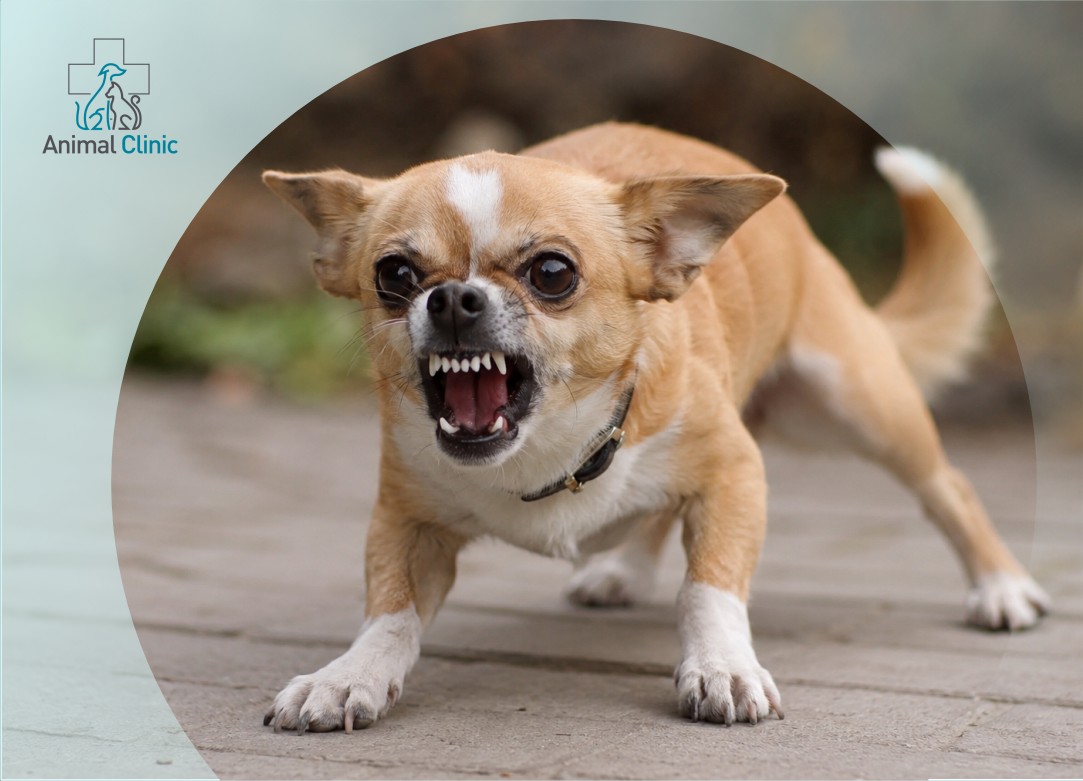
Aggression is the most common reason dog owners seek advice from veterinary consultants and animal behaviourists. However, the single word “aggression” can conceal dozens of different mechanisms: fear, pain, territoriality, resource guarding, frustration, maternal instinct, or true dominance. Correctly identifying the type of aggression determines whether the problem can be managed independently or requires medical attention.
Fear Aggression: The Most Common Type Mistaken for Dominance
Up to 70% of cases of aggressive behaviour in dogs are caused by fear. A dog that has no opportunity to escape switches to defence: it growls, snaps its teeth, and may bite. Owners often describe this as “sudden anger for no reason,” but there is always a reason — fear of people, other dogs, loud noises, or certain situations. If you do not know what to do about aggression in a dog, first assess whether the animal is afraid.
Signs of fear aggression include a tucked tail, flattened ears, trembling, a crouched posture, turning the head away, visible whites of the eyes (“whale eye”), lip licking, and yawning. The dog tries to make itself look smaller. This is not dominance — it is panic.
Dominance Aggression and Resource Guarding
True dominance aggression is much less common and is typical of adolescence (6–18 months), when a dog tests social boundaries. It appears in competitive situations: growling when someone tries to take away a food bowl or toy, or to occupy a place on the sofa. Resource guarding is a separate type of behaviour in which a dog aggressively protects food, toys, a bed, or even a person.
The difference from fear is that the body is tense but not pressed to the ground, the head is raised, the ears point forward, the tail is raised or held stiffly downward, and the gaze is direct. The dog tries to make itself look larger. This type of aggression requires correction with an experienced specialist, as punishment can make the problem worse.
Aggression Towards Other Dogs: Socialisation or Trauma?
Aggression towards other dogs can have many causes: insufficient socialisation during puppyhood (the critical period lasts until 14 weeks of age), negative experiences such as an attack or fight, fear of large dogs, or a possessive instinct regarding territory or the owner. Dogs with increased anxiety often project their fear onto other animals.
Breed predisposition also exists: terriers, herding breeds, and guard breeds have a genetic tendency towards intraspecific aggression. This does not mean correction is impossible, but it requires more time and patience.
Medical Causes of Aggression: When a Veterinarian Is Needed
Any chronic pain can cause aggression. Arthritis, osteochondrosis, dental disease, thyroid disorders, neurological conditions, and hormonal imbalances may cause a dog to growl when touched because it is in pain. A clinical examination including palpation, blood tests, and assessment of the musculoskeletal system is essential before any behavioural correction begins.
Red flag: aggression that suddenly appears in an adult dog with no previous history of behavioural problems. This is almost always due to a medical cause — pain, a neurological or endocrine disorder, or even a brain tumour.
Step-by-Step Action Plan for Aggression
- Safety first: use a muzzle and prevent children and other animals from approaching the dog until a specialist has been consulted.
- Rule out pain and medical causes — book an appointment with a veterinarian.
- Keep a behaviour diary: record triggers, time, surroundings, and warning signals during the 10 minutes before an incident.
- Avoid punishment — it increases stress and cortisol levels, making aggression worse.
- Work with a specialist: consult an animal behaviourist to develop a desensitisation and counterconditioning plan.
Frequently Asked Questions
How can fear aggression be distinguished from dominance aggression?
With fear aggression, the dog tries to appear smaller — it flattens its ears, tucks its tail, trembles, and turns its head away. With dominance aggression, the dog stands upright, points its ears forward, raises its tail, and looks directly ahead. The correction strategies are fundamentally different: fear requires support and desensitisation, while dominance requires clear boundaries and obedience.
Is an animal behaviourist for dogs in Kyiv necessary, or can owners manage the problem themselves?
If aggression occurs in more than one situation, the dog has already bitten a person or another animal, or you cannot identify the trigger, professional help is necessary. Owners should attempt to manage the problem independently only at an early stage, when aggression occurs rarely, in predictable situations, and without biting.
Can aggression in dogs be treated with medication?
Medication is a supporting method, not the primary treatment. Fluoxetine, clomipramine, and selegiline can reduce anxiety and impulsivity, but they work only in combination with behavioural therapy. Giving a dog human antidepressants or sedatives without veterinary supervision can be life-threatening.
My dog growls when I approach its food bowl — is this dominance?
This is resource guarding, not dominance. The dog is afraid of losing a valuable resource. Do not take the bowl away by force or punish the dog, as this will increase anxiety. Instead, add more valuable food as you approach, gradually reducing the distance.
My puppy bites hands and feet — will it grow out of it?
Play biting is normal behaviour in puppies up to 4–5 months of age. It is important to teach a puppy to control the strength of its bite: stop the game after a painful bite and redirect its attention to toys. Once the adult teeth have come in, biting human skin should stop. If it continues after 6 months of age, behavioural correction is needed.
Are there dog breeds that are genetically aggressive towards other dogs?
Yes, certain breeds have a genetic tendency towards intraspecific aggression, including fighting breeds, terriers, and some herding and guard breeds. This does not mean the dog will necessarily be aggressive, but the likelihood is higher, and greater attention should be paid to socialisation from an early age.
Is it dangerous to neuter an aggressive dog?
Neutering reduces aggression associated with sex hormones, including intraspecific and territorial aggression, but it does not affect aggression caused by fear, anxiety, or pain. Neutering does not replace behavioural therapy. The procedure is safe after preliminary blood tests and assessment of the cardiovascular system.
My dog growls at children — can this be corrected?
Yes, but systematic work under the guidance of a specialist is required. Children move unpredictably, make high-pitched sounds, and may invade a dog’s personal space. Always supervise interactions, teach children not to disturb the dog while it is eating or sleeping, and provide the dog with a safe place that children cannot access.
How long does correction of aggression in dogs take?
The duration depends on the type of aggression, how long it has been present, the owner’s consistency, and the dog’s age. Mild cases, such as fear during a first meeting, can be corrected in 4–6 weeks. Serious socialisation problems or trauma may require 6–12 months of regular work.
Can thyroid disease cause aggression?
Yes, hypothyroidism in dogs is often accompanied by increased irritability and aggression. A lack of thyroid hormones affects metabolism in the brain.
How can I book an appointment for my pet at Animal Clinic?
You can book a consultation with an Animal Clinic veterinarian by calling (044) 344 15 73 or (067) 568 53 41 , or by using the appointment form at animalclinic.ua. An administrator will arrange a convenient time based on the urgency of the problem.