
- Main
- News and events
- 5 Signs It’s Time to Take Your Pet to the Vet
5 Signs It’s Time to Take Your Pet to the Vet
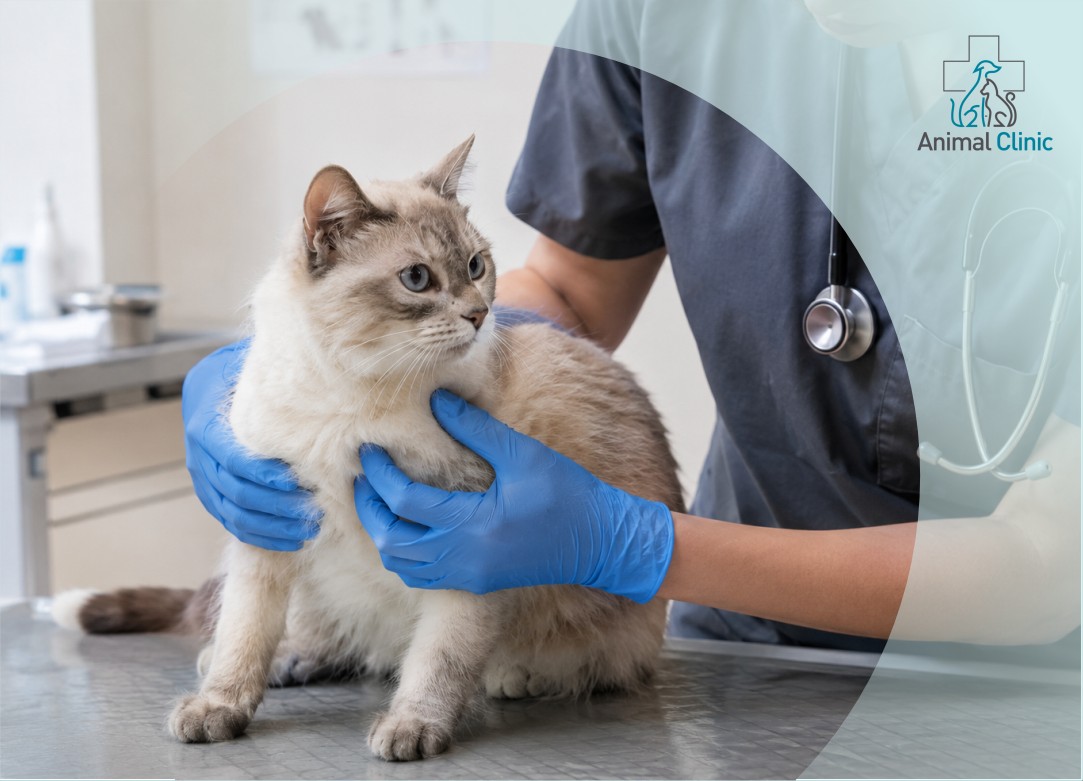
Pets cannot tell us exactly where they are in pain or what has changed in how they feel. Often, the first signs of a problem are small changes in their usual behavior: a dog refuses its morning meal, a cat begins sleeping more, a pet drinks water more frequently, or suddenly stops jumping onto the sofa.
Not every change necessarily indicates a serious illness. However, if a symptom persists, recurs, becomes more severe, or appears together with other signs, it is best not to postpone a veterinary consultation.
The veterinarians at Animal Clinic explain five common signs that should prompt owners to take a closer look at their dog’s or cat’s health.
1. Changes in appetite
Appetite is an important indicator of an animal’s overall health.
A complete refusal to eat is not the only warning sign. Pay attention if your dog or cat:
- eats significantly less than usual;
- refuses its favorite food;
- approaches the bowl but does not begin eating;
- chews only on one side of the mouth;
- drops food from its mouth;
- suddenly begins eating much more than usual;
- loses or gains weight for no apparent reason.
Why a dog or cat may refuse food
The causes can vary—from dental and oral problems to digestive disorders, pain, poisoning, infectious diseases, or systemic illness.
For example, a pet with dental pain may want to eat but avoid hard food. When experiencing nausea, a pet may approach the bowl, smell the food, and then walk away.
Therefore, it is important to ask not only “Is the pet eating or not?” but also how its eating behavior has changed.
If refusal to eat is accompanied by vomiting, diarrhea, pain, severe weakness, or other symptoms, do not delay contacting a veterinarian.
2. Lethargy or unusual behavior
Owners know their pets’ normal personalities and habits well.
That is why a sudden behavioral change is often one of the first signs that an animal is not feeling as usual.
Pay attention if your dog or cat:
- sleeps considerably more than usual;
- does not want to play;
- refuses to go for a walk;
- hides;
- avoids contact;
- does not allow a particular part of the body to be touched;
- has become restless;
- frequently changes body position;
- behaves unusually for no apparent reason.
Lethargy is a nonspecific symptom. It may accompany many conditions, ranging from pain or fever to disorders affecting the internal organs.
For this reason, the entire combination of symptoms should be evaluated.
“He’s just not in the mood today”—should you be concerned?
A one-time change in activity is not always a reason to panic.
However, if a previously active dog suddenly does not want to get up from its bed, a cat constantly hides, or the animal’s behavior changes significantly, it is worth monitoring the pet more closely.
If the condition does not return to normal or additional symptoms appear, a veterinary consultation is necessary.
3. The pet has started drinking a lot of water
The amount of water an animal drinks may change depending on air temperature, physical activity, diet, and other factors.
For example, a pet eating dry food generally receives less water from its food than an animal eating a wet diet.
However, if you notice that your dog or cat is drinking noticeably more water for no apparent reason, you should discuss this with a veterinarian.
It is especially important to pay attention if increased thirst is accompanied by any of the following:
- more frequent urination;
- asking to go outside during the night;
- urinating inside the home;
- weight loss;
- increased appetite or, conversely, loss of appetite;
- increased weakness;
- changes in the condition of the coat or skin.
What excessive thirst may indicate
Increased thirst may occur with various conditions, including kidney disease, endocrine disorders, diabetes, and other systemic illnesses.
However, a diagnosis cannot be made based only on the amount of water consumed.
A veterinarian evaluates the symptoms as a whole and may recommend blood tests, urine tests, an ultrasound examination, or other diagnostic procedures when necessary.
Helpful advice
If you think your pet has started drinking more, try to keep an approximate record of the amount of water consumed over several days.
This information may be helpful to the veterinarian during the consultation.
4. Persistent itching
Every animal scratches occasionally, and this is normal.
However, if a dog or cat constantly scratches itself, chews its fur, or continuously licks the same area, it is time to look for the cause.
Warning signs include:
- frequent scratching;
- constant licking of the paws;
- skin redness;
- rashes;
- dandruff;
- crusts or scabs;
- bald patches;
- an unpleasant skin odor;
- scratches or wounds;
- ear problems.
Why a pet may constantly scratch itself
Itching may be associated with:
- fleas;
- mites and other parasites;
- allergic conditions;
- skin inflammation;
- bacterial or fungal infections;
- other dermatological problems.
Even if the owner cannot see fleas or other parasites, this does not necessarily mean that they are absent.
Therefore, when itching is severe, it is important not only to relieve the symptom but also to determine its cause.
What not to do
Without consulting a veterinarian, do not independently use:
- hormonal medications;
- antibiotics;
- antifungal medications;
- ointments intended for people;
- randomly selected antiseptics;
- allergy medications.
These products may alter the clinical picture or be dangerous for the animal.
5. Limping or changes in mobility
Limping does not always occur after an obvious injury.
Sometimes the owner simply notices that the dog has started to:
- get up more slowly;
- run less;
- avoid jumping;
- avoid stairs;
- tire more quickly;
- hold up one paw;
- shift its weight onto another limb.
Pain may be even less noticeable in cats. A cat may stop jumping onto its favorite place, move less often, or spend more time in one position.
Why an animal may limp
Possible causes include:
- injury;
- damage to a paw pad;
- a foreign object between the toes;
- a claw problem;
- joint disease;
- ligament disorders;
- spinal problems;
- other orthopedic or neurological conditions.
Owners of senior pets sometimes attribute mobility problems solely to age.
However, age itself is not a diagnosis. If an animal is in pain or its mobility has noticeably changed, the cause should be identified.
Do not wait until the symptom becomes severe
One common mistake is waiting and thinking:
“Let’s watch for a few more days—perhaps it will resolve on its own.”
Sometimes a symptom may indeed be temporary. In other cases, however, delaying care allows the disease to continue progressing.
Situations in which several signs appear at the same time require particular attention.
For example:
- refusal to eat + lethargy;
- excessive thirst + frequent urination;
- itching + bald patches;
- limping + severe pain;
- lethargy + vomiting or diarrhea;
- reduced appetite + weight loss.
The more changes you notice, the more important it is not to postpone an examination.
When urgent veterinary care is required
Some symptoms require a faster response.
Seek immediate veterinary care if your pet has:
- difficulty breathing;
- loss of consciousness;
- seizures;
- severe bleeding;
- severe pain;
- repeated vomiting;
- significant abdominal swelling;
- an inability to urinate;
- suspected poisoning;
- a serious injury;
- a sudden deterioration in its overall condition.
In these situations, do not wait for a scheduled appointment or attempt to treat the animal without professional assistance.
What to prepare before visiting the veterinarian
To make the consultation as informative as possible, it is helpful for the owner to remember or record:
- when the symptom first appeared;
- whether it is becoming more severe;
- what the animal has eaten recently;
- whether its food has been changed;
- which medications the pet is receiving;
- when the pet was vaccinated;
- when the last parasite treatment was administered;
- whether vomiting or diarrhea has occurred;
- how the amount of water consumed has changed;
- whether urination or bowel movements have changed.
If a symptom appears only occasionally—for example, limping, coughing, or unusual behavior—you can record a short video. It may help the veterinarian assess the situation more accurately.
If you notice changes in appetite, lethargy, excessive thirst, itching, limping, or unusual behavior, you do not need to wait until the condition becomes significantly worse.
At Animal Clinic, your pet can receive a clinical examination and, when necessary, a plan for further diagnostic testing.
If your pet’s behavior or well-being has changed, it is best to determine the cause. A timely veterinary examination helps identify the problem earlier and determine the appropriate course of action.
FAQ: when should you contact a veterinarian?
My dog is not eating—when should I contact a veterinarian?
It is important to consider the dog’s age, overall condition, and other symptoms. If the refusal to eat persists or the animal is lethargic, vomiting, experiencing diarrhea or pain, or showing other changes in well-being, do not postpone a veterinary consultation.
Why has my cat stopped eating?
There may be many causes, including dental problems, nausea, pain, digestive or kidney disease, and other conditions. A prolonged refusal to eat should not be ignored, especially in cats—a veterinary examination is necessary.
Why has my dog become lethargic?
Lethargy is a nonspecific symptom that may accompany pain, fever, infectious disease, metabolic disorders, and other conditions. If your dog’s activity level has noticeably changed for no apparent reason, the dog should be examined by a veterinarian.
Why has my dog or cat started drinking a lot of water?
Thirst may increase because of hot weather, activity, or dietary factors. However, a persistent increase in water consumption may occur with kidney disease, diabetes mellitus, endocrine disorders, and other conditions. The cause is determined after an examination and any necessary diagnostic tests.
Why does my dog constantly scratch even though I cannot see any fleas?
The absence of visible fleas does not rule out a parasitic problem. Allergies, mites, inflammatory conditions, or infectious skin diseases may also be responsible. A veterinary examination is required to determine the cause.
Should I take my dog to the veterinarian if it is limping slightly?
If the limping does not resolve quickly, recurs, becomes more severe, or causes pain, it is best to have the dog examined. The cause may be a minor paw injury or a problem involving a joint, ligament, or another structure.
Why has my cat suddenly started hiding?
Hiding may be normal behavior for some cats. However, if a cat suddenly begins avoiding contact, eats less, becomes lethargic, or develops other symptoms, the change may be related to pain or poor health.
Can I give my pet a human painkiller before visiting the veterinarian?
Do not give a dog or cat human pain medication unless it has been prescribed by a veterinarian. Some medications commonly used by people can be toxic to animals.
Which tests are needed if my pet has become lethargic?
There is no single set of tests suitable for every case. The veterinarian first performs a clinical examination and collects the animal’s medical history. Blood tests, urine tests, ultrasound, X-rays, or other examinations may then be recommended when indicated.
Where can I have my dog or cat examined in Kyiv?
You can schedule a veterinary examination at an Animal Clinic location in Pozniaky, Osokorky, Pechersk, Sofiivska Borshchahivka, or the urban-type settlement of Borova. The veterinarian will assess the animal’s overall condition and determine whether further diagnostic testing is necessary.